
Budget Pacing: The Unglamorous Skill That Protects Results
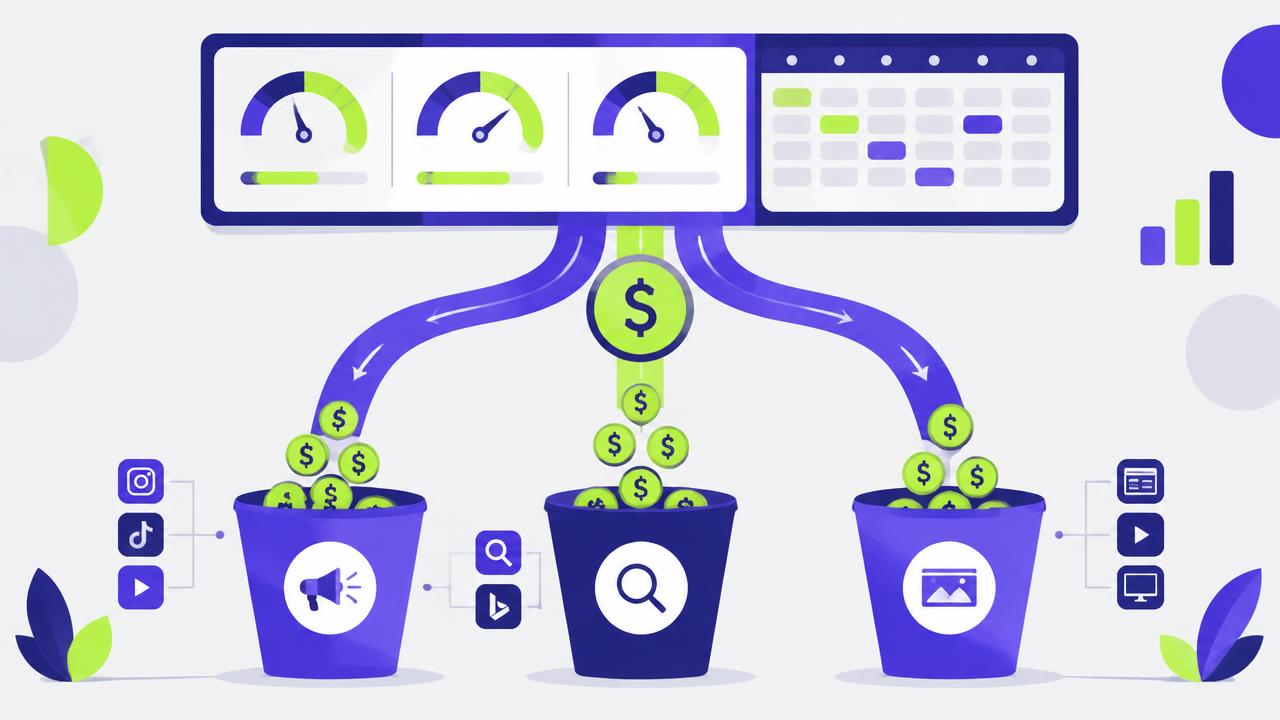
Pacing gets no attention because it is administrative. It also explains more month-to-month variance in performance than most of the tactical work that does get attention. A channel that spends 40% of its budget in the last week of the month is buying its most expensive inventory under time pressure, and the resulting efficiency drop will be blamed on creative fatigue or auction pressure.
The two failure shapes
Underspend is the quiet one. Daily caps that bind, disapproved assets, conservative targets - budget simply does not go out, and the team discovers this with a week left. Overspend is the loud one: a campaign runs away early, and the remaining weeks are throttled to compensate, which puts the account in learning right when it matters.
A month that ends exactly on budget can still be three bad weeks and one panicked one.
Plan by week
| Week | Planned share | Purpose |
|---|---|---|
| Week 1 | 25% | Steady state, confirm tracking and delivery |
| Week 2 | 25% | Read early signals, adjust targets in small steps |
| Week 3 | 25% | Scale what works, pause what does not |
| Week 4 | 15% | Stabilise; avoid new tests entering learning |
| Reserve | 10% | Opportunities, corrections, seasonal spikes |
Check pacing three times a week
Not daily - daily checks invite daily edits, and daily edits keep automated bidding in permanent recalibration. Three fixed check-ins per week are enough to catch a runaway campaign and slow enough to let the system settle between changes.
Seasonality is a plan input
If demand doubles in a known period, the budget should be raised before it arrives, not during. Platforms need lead time to adjust, and raising a budget 40% on the first big day almost guarantees a learning reset at the worst moment. Build the seasonal curve into the plan a month ahead and adjust targets to reflect the higher conversion rates the period brings.
What to do with the reserve
The unallocated slice is not slack to be spent by default. It funds three things: covering a channel that is underdelivering for structural reasons, capturing an unexpected demand spike, and funding a test you could not have planned. If it goes unused two months running, the base plan is too conservative and should be rebalanced rather than topped up.
Related articles

Match Types and Negatives: Steering Broad Without Bleeding
Broad match is a proposal, not a promise. Negatives are how you answer it.

Retargeting Works Until It Annoys: Setting Frequency Honestly
Retargeting does not create demand, it closes it. Budget it like a closing tool and cap it like one.
Meta Ads Account Structure in 2026: Consolidate, But Not Blindly
Fewer campaigns usually means faster learning. But consolidation fails predictably in three situations, and knowing them is worth more than any template.