
CAC Payback Sets Your Real Budget Ceiling
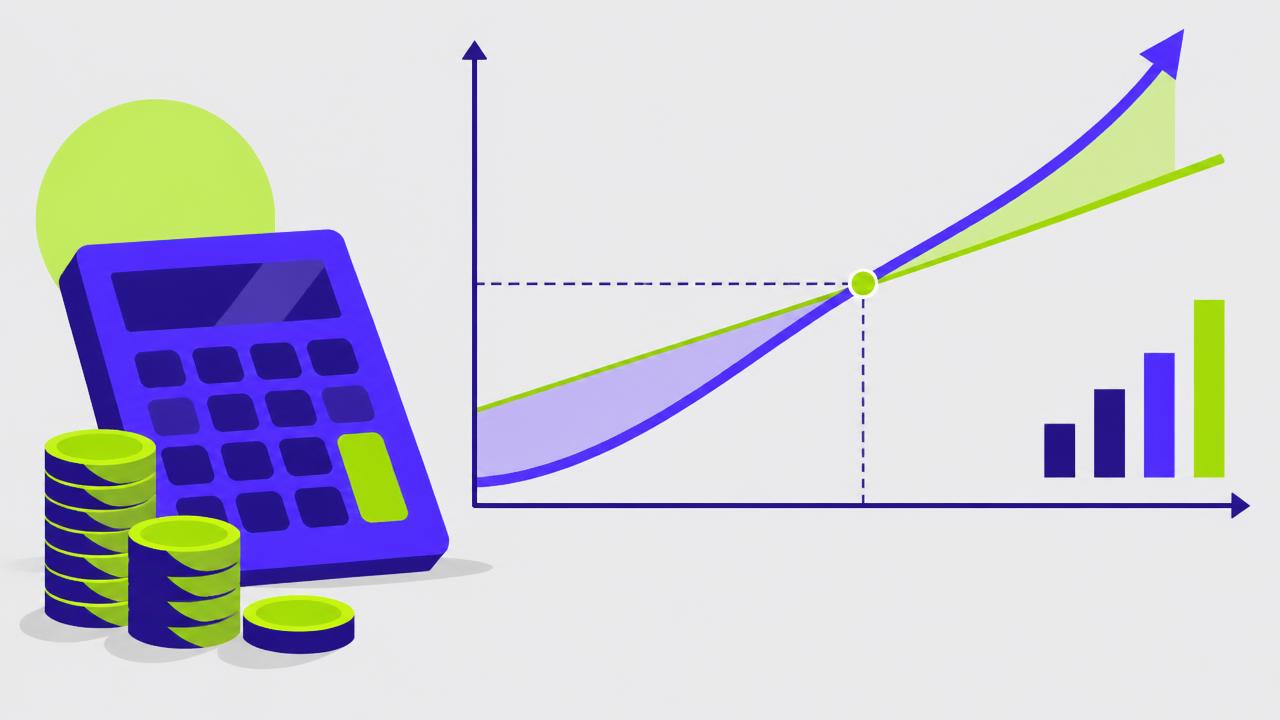
Lifetime value to acquisition cost is the most quoted and least reliable number in marketing. Its weakness is structural: lifetime value is an extrapolation of a retention curve you have not finished observing, multiplied by a margin assumption, and small changes to either input swing the answer wildly. Two analysts with the same data routinely produce ratios that differ by a factor of two.
Payback period asks a narrower question with a checkable answer: how many months until the gross profit from a cohort covers what it cost to acquire? It uses only observed data and it maps directly to cash, which is why it survives contact with a finance team.
Computing it honestly
The formula is acquisition cost divided by monthly gross profit per customer. The errors are all in the inputs.
- Use gross profit, not revenue. A customer paying $100 a month at 70% gross margin contributes $70. Using revenue makes payback look 30% faster than it is, and for businesses with hosting, payment processing, shipping or support costs the gap is larger still.
- Include every acquisition cost. Media spend, marketing salaries and contractors, agency fees, creative production, martech subscriptions, and sales compensation where sales closes the deal. Media-only CAC is typically 40-60% of the real figure.
- Count new customers only. Expansion revenue from existing customers does not belong in the numerator of an acquisition calculation.
| Payback period | Interpretation | Implication for spend |
|---|---|---|
| Under 6 months | Excellent | Spend more aggressively |
| 6-12 months | Healthy | Grow steadily, watch cash |
| 12-18 months | Acceptable with funding | Requires capital or high retention |
| Over 18 months | Fragile | Fix retention or pricing first |
Payback period is a cash constraint before it is a profitability judgement. A twenty-month payback can be perfectly profitable and still bankrupt you.
Why it caps growth
Without external funding, marketing is paid for by cash from earlier cohorts. Payback period sets the speed of that recycling. At six months, each dollar spent returns to be spent again twice a year; at eighteen months, once every year and a half. Two businesses with identical unit economics and different payback periods grow at completely different rates from the same starting cash.
Billing terms are a growth lever. Shifting customers from monthly to annual prepayment collapses payback to effectively immediate for those cohorts. A discount of 15-20% for annual is usually cheaper than the capital you would otherwise need — which is why it is standard practice rather than generosity.
Compute it by channel
Blended payback hides the decision. A brand-search campaign paying back in two months averaged with a display campaign paying back in thirty produces a comfortable-looking blended figure and no information. Break it out by channel and by cohort month, and the picture usually shows one or two channels carrying the average while another consumes cash indefinitely.
Channel-level attribution is imperfect, which is the standard objection. It is imperfect in both the numerator and denominator, and the ordering of channels is generally robust even when the absolute numbers are not. Calibrate with incrementality tests where the spend is large enough to justify one.
Setting the ceiling
Work backwards. Decide the maximum acceptable payback given your cash position and funding, multiply by monthly gross profit per customer, and you have the maximum allowable acquisition cost per customer. Multiply by the number of customers you can realistically acquire at that cost and you have the budget ceiling — derived rather than negotiated.
Recompute quarterly. Margin changes, pricing changes and retention changes all move the ceiling, and a budget set against last year''s economics is the most common way a profitable growth programme quietly becomes an unprofitable one.
Related articles

Growth Loops vs Funnels: Why Your Acquisition Math Keeps Breaking
Funnel thinking treats every customer as a terminal event. Loop thinking asks what each customer produces. The difference shows up in your CAC curve about nine months in.
Referral Programs That Work, and the Four Reasons Most Do Not
A referral program is not an incentive, it is a moment. Get the moment wrong and no reward size will save it.
How to Run Pricing Experiments Without Breaking Trust
A ten percent price increase absorbed without churn is worth more than most acquisition campaigns. The question is how to find out safely.