
A Creative Testing Framework That Survives Contact With Reality
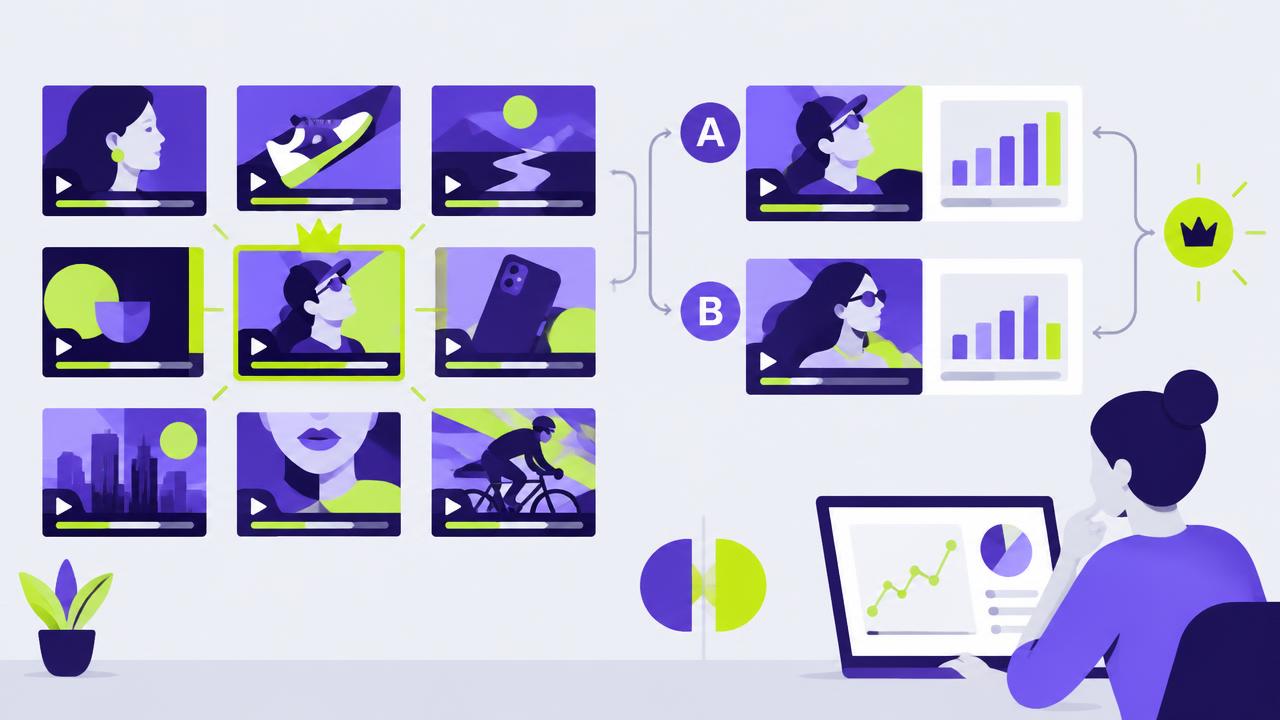
Ask a media buyer how creative testing works in their account and you will usually hear a process that is really a production schedule: the agency ships twelve assets a month, they go live, the best two get more budget. Nothing about that loop produces knowledge. Next month the team is guessing with exactly the same information it had before, because the twelve assets differed in a dozen ways at once and no comparison was clean.
A framework fixes this by imposing three disciplines: name the variable, pre-commit to the decision rule, and record the outcome somewhere a new hire can read.
The five variables worth isolating
Creative is not one thing. In practice, five dimensions account for nearly all the variance in performance, and they have very different effect sizes.
| Variable | What changes | Typical effect on CPA | Test cadence |
|---|---|---|---|
| Angle | The core promise or problem framed | Large (30-60%) | Monthly |
| Offer | Price framing, bundle, guarantee | Large (20-50%) | Quarterly |
| Hook | First 3 seconds or headline | Medium (15-30%) | Weekly |
| Format | UGC, static, motion graphic, founder | Medium (10-25%) | Monthly |
| Proof | Testimonial, data, demo, press | Small-medium (5-20%) | Monthly |
The ordering matters because effort should follow effect size. Teams routinely spend their production budget on format variations — the most visible, most fun thing to change — while the angle has not been revisited in a year. Angle tests are cheap: the same footage recut with a different opening claim is often enough.
Pre-committing to the decision
The single highest-leverage change most teams can make is deciding the success criteria before launch. Write down three things for every test: the minimum impressions or conversions before you look, the metric that decides, and the threshold.
For a typical direct response account, a workable default is: 1,500 impressions minimum per asset before any judgement, at least 25 link clicks before considering CPC, and no CPA verdict below 15 conversions. Below those volumes you are reading noise. A difference between $42 and $51 CPA on nine conversions each is not a difference.
If you cannot say in advance what result would make you kill your favourite concept, you are not testing it — you are launching it.
Diagnose with the funnel inside the ad
CPA tells you an ad failed. It does not tell you where. Three intermediate metrics localise the failure and should be on every creative report.
- Hook rate (3-second views ÷ impressions): measures whether the opening stops the scroll. Benchmarks vary wildly by category, so compare against your own account median rather than an industry figure.
- Hold rate (thruplays ÷ 3-second views): measures whether the body sustains attention. A strong hook with a weak hold means the promise was not paid off.
- Click-through on the outbound link: measures whether the ad created enough intent to act. High hold and low CTR usually means the ad entertained rather than sold.
The diagnostic pattern is straightforward. Weak hook, fix the first three seconds. Strong hook, weak hold, fix the middle. Strong hold, weak click, fix the call to action and the specificity of the promise. Strong click, weak conversion, the problem is the landing page or the offer, not the creative.
Realistic hit rate: in a mature account, expect roughly one in eight to one in twelve tested concepts to beat the incumbent control. Plan production volume from that number backwards. If you need two new winners a quarter, you need to test around twenty concepts.
Ad fatigue is not what you think
Rising CPA on an ad that has been live for six weeks is usually read as fatigue, and the reflex is to swap the asset. Sometimes correct. But two other causes are common and produce the same chart: the audience pool is saturating (frequency rises, reach plateaus), or the account has shifted budget and the ad is now competing in a more expensive auction slot.
Check frequency and unique reach before concluding fatigue. If frequency is under about 2.5 in a large market and CPA is still climbing, the creative is probably not the problem. Replacing it will feel like it worked for a week because of the delivery reset, and then you are back where you started.
Keeping a creative library
The most valuable artifact a testing programme produces is institutional memory. Maintain one table with a row per tested concept: date, variable tested, description, spend, result versus control, and a one-line conclusion. It takes five minutes per test.
Within two quarters this becomes the thing that separates a professional operation from a busy one. New team members stop re-testing angles that failed twice, seasonal winners get resurfaced at the right time, and the "let us try UGC" conversation ends with evidence rather than opinion.
A weekly operating rhythm
A workable cadence for an account spending $50k-$200k a month: Monday, review last week's tests against the pre-set thresholds and promote or kill with no discussion of feelings; Tuesday, brief the next batch against a single named variable; Thursday, launch into the testing campaign at fixed budget; Friday, log results in the library.
The rhythm matters more than the volume. A team shipping four well-controlled tests a week learns faster than one shipping twenty uncontrolled ones, and it does so at a fraction of the production cost.
Related articles

Match Types and Negatives: Steering Broad Without Bleeding
Broad match is a proposal, not a promise. Negatives are how you answer it.
Retargeting Works Until It Annoys: Setting Frequency Honestly
Retargeting does not create demand, it closes it. Budget it like a closing tool and cap it like one.
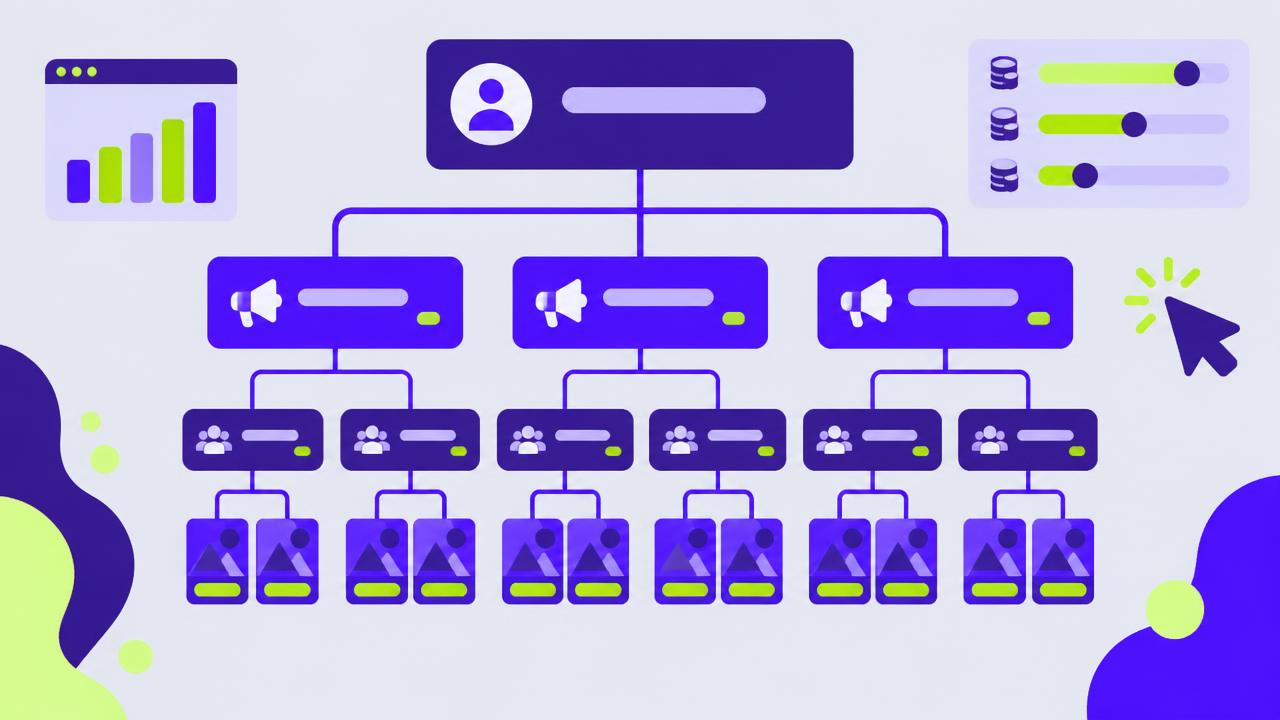
Meta Ads Account Structure in 2026: Consolidate, But Not Blindly
Fewer campaigns usually means faster learning. But consolidation fails predictably in three situations, and knowing them is worth more than any template.