
The Lifecycle Email Map Every Team Should Draw First
Most email programmes are organised around a calendar. Someone decides what goes out on Tuesday, a designer builds it, and the list receives it. The calendar is visible, easy to staff and easy to measure, which is why it consumes the majority of most teams'' effort. It is also where the least revenue per send lives.
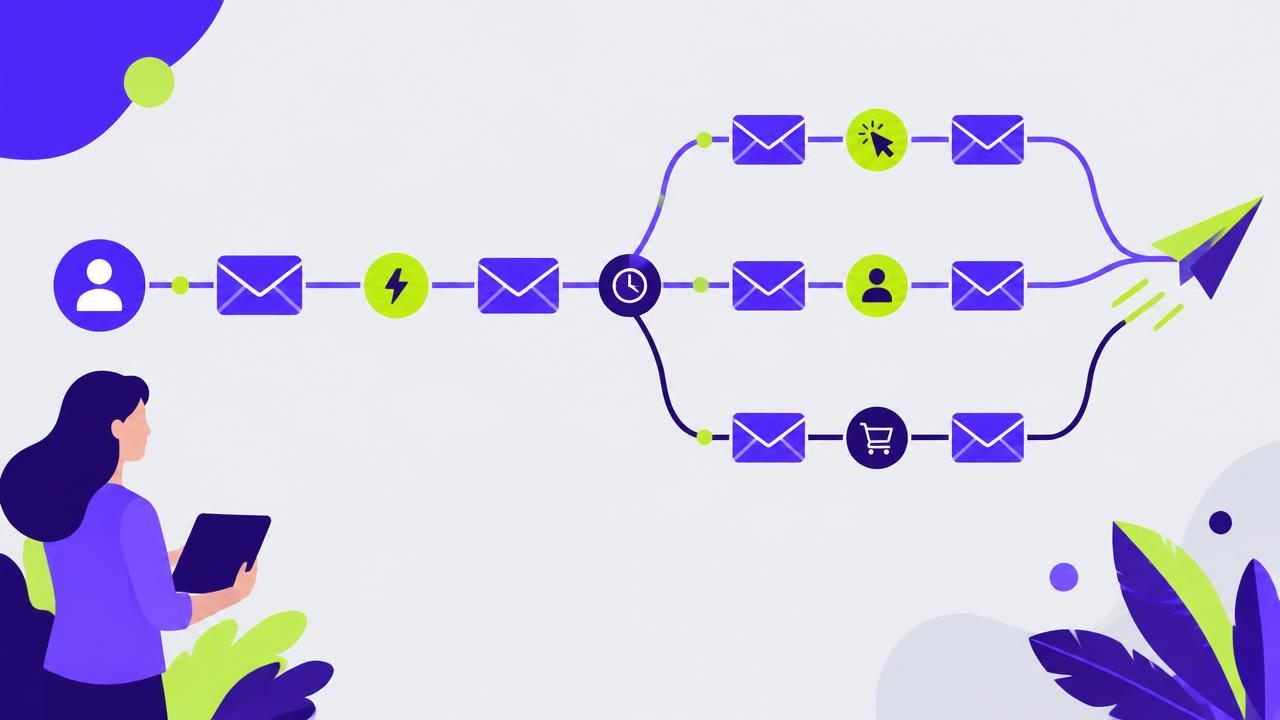
The alternative is to organise around moments. A lifecycle map is a diagram of the points in a customer relationship where a message can plausibly change what happens next, with one flow attached to each. It takes an afternoon to draw and it usually reveals three or four missing flows worth more than the entire broadcast calendar.
The seven moments
| Moment | Trigger | Job of the message | Typical flow length |
|---|---|---|---|
| Arrival | Signup, first purchase | Set expectation, deliver first value | 3-5 emails |
| Activation | Key action not yet taken | Remove the specific blocker | 2-4 emails |
| Habit | Regular usage established | Deepen use, introduce adjacent value | Ongoing |
| Expansion | Usage nears a limit or new need appears | Present the upgrade in context | 2-3 emails |
| Risk | Engagement drops below baseline | Diagnose and re-engage | 2-3 emails |
| Churn | Cancellation or lapse | Capture reason, offer alternative | 1-2 emails |
| Win-back | Dormant 60-180 days | New reason to return | 2-3 emails |
Draw your own version and mark which flows exist today. The common pattern in an established business is a strong arrival flow, a cart or trial reminder, and nothing else. Risk and expansion are almost always missing, and they are almost always the two with the best economics because they act on people who already understand the product.
Behaviour beats schedule
A time-based sequence sends email three on day seven regardless of what the recipient did. A behavioural sequence branches on the action the previous email was trying to cause. The difference in relevance is enormous and the implementation cost is a few conditional steps.
The minimum viable branching for an onboarding flow: did they complete the activating action? If yes, skip to value-deepening content. If no, send the specific unblocker for the step they stalled on. If still no after two attempts, stop sending onboarding email and move them to the general list. That last branch — the exit — is the one teams forget.
Every flow needs an exit condition. Without one, a customer who bought yesterday still receives "have you considered buying?" on Thursday, and your credibility goes with it.
Budget the attention, not just the sends
Each new flow is added in isolation and enthusiasm, and the combined effect is a user receiving eleven messages in a week. Set a global frequency cap before building anything: total messages per user per week, with a priority order that decides which flow wins when two want to send on the same day.
Priority order that works: transactional first, then time-sensitive triggered (cart, trial expiry), then lifecycle flows, then broadcasts. Broadcasts yield to everything, because they are the least targeted message in the system.
Writing for the moment
Triggered messages fail when they are written like campaigns — branded headers, three offers, six links. The high-performing versions are short, plain, single-purpose and often plain text. They reference the specific thing the person did, and they contain exactly one action.
A useful constraint: if the email would not make sense as a message from an individual colleague, it is probably too decorated for a triggered moment. Save the design system for the newsletter.
Measuring flows honestly
Open rate has been unreliable since privacy-protection features began pre-fetching images, and it was never a revenue metric anyway. For lifecycle work, measure two things: revenue per recipient over a fixed window after entry, and incrementality.
The second one requires a holdout. Exclude 5-10% of eligible users from each major flow and compare their behaviour with the treated group over 30 days. This is uncomfortable — nobody wants to withhold a win-back email — but without it you will credit the flow with purchases that would have happened anyway. It is common for an abandoned-cart flow measured with attribution to look three or four times more valuable than it measures with a holdout.
Segmentation by engagement, not demographics
The most useful segmentation in lifecycle email is recency of engagement, not persona. Three tiers is enough: engaged (opened or clicked in 30 days), lapsing (31-90), dormant (90+). Send the full programme to the engaged tier, reduce frequency for lapsing, and send only deliberate win-back attempts to dormant users before suppressing them.
This has a second benefit that most teams discover by accident: reducing sends to the dormant tier improves inbox placement for everyone, because mailbox providers read sustained non-engagement as a negative signal. Lifecycle hygiene and deliverability are the same project.
Where to start on Monday
Draw the seven moments. Mark what exists. Pick the missing flow that touches the most people with the highest intent — usually risk or expansion — and build it with three emails, one branch and an exit condition. Add a 10% holdout from day one. You will have a defensible number within a month, which is the only way this work keeps getting funded.
Related articles
Growing a Newsletter Without Buying Anyone
Fast list growth is easy to buy and impossible to keep. The compounding sources are slower and far more valuable.
List Hygiene: Sending Less to Earn More
A smaller list that reaches the inbox beats a large one that reaches the spam folder. It is not close.
Transactional Email Is Your Most-Read Channel
The email with the highest open rate in your account is almost certainly a receipt nobody optimised.