
Marketplace Growth Is a Liquidity Problem, Not a Traffic Problem
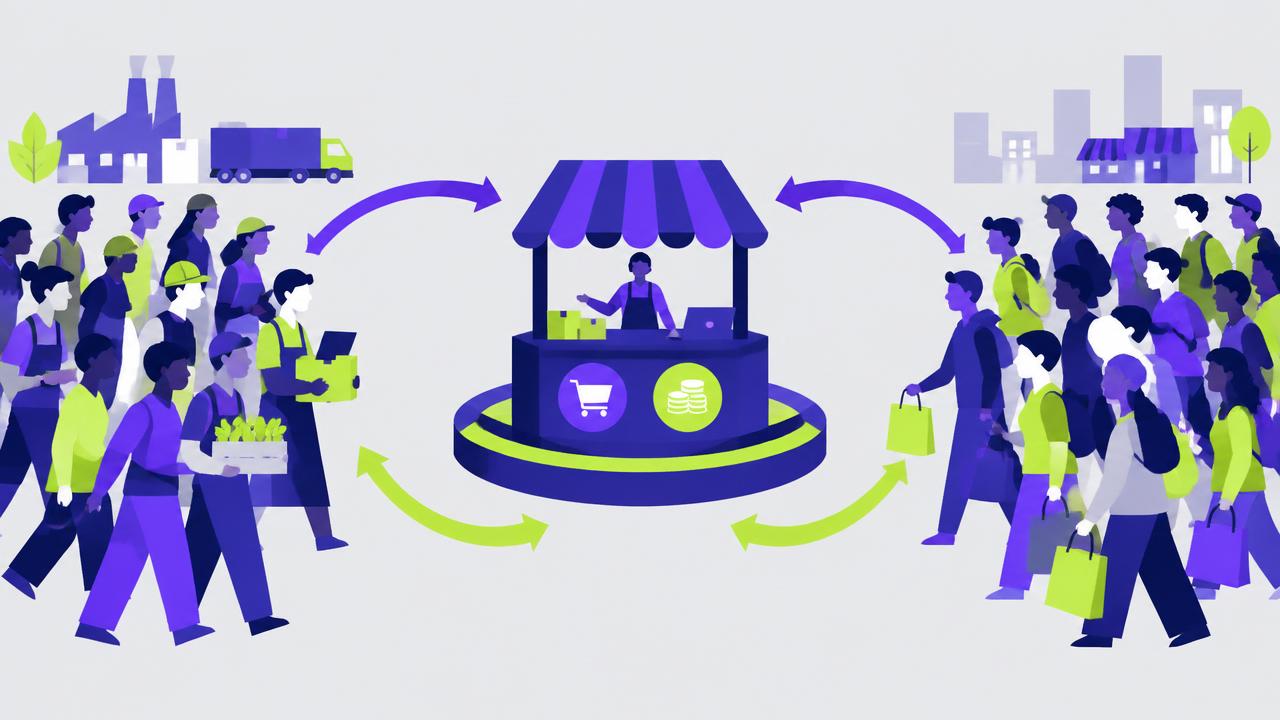
The characteristic marketplace failure is well documented and still common: raise money, spend it acquiring supply and demand nationally, watch both sides churn because neither found what they came for. Total signups look excellent right up until the cohort analysis arrives.
The underlying error is treating a marketplace like a media business where more traffic is always better. In a marketplace, traffic without a match is worse than no traffic, because a failed visit teaches the user that the product does not work, and they do not come back.
Liquidity, defined usefully
Liquidity is the probability that a given participant gets what they came for within an acceptable time. Two numbers express it: match rate (share of buyer intents that result in a transaction) and time to match. On the supply side, mirror them: share of listings that transact within a period, and time to first transaction for a new supplier.
| Metric | What it reveals | Warning threshold |
|---|---|---|
| Buyer match rate | Whether demand is being served | Under 30% in the core segment |
| Time to match | Whether the experience feels reliable | Longer than the category norm |
| Supplier first-transaction rate | Whether supply will stay | Under 50% in 30 days |
| Repeat rate, both sides | Whether liquidity is believed | Below acquisition replacement rate |
Constrain until it works
The reliable path is to shrink the market until liquidity appears, then expand. Constrain by geography, by category, by time window, or by a combination — whatever dimension governs whether two participants can actually transact.
The discipline is in resisting expansion. A city with 70% match rate and a waitlist is the strongest asset an early marketplace can have, because it proves the model and it produces the reference stories that make the next city cheaper. Ten cities at 15% prove nothing and cost ten times as much to maintain.
Depth in one market is evidence. Breadth across many is expense.
Identify the hard side correctly
One side is always harder to acquire and retain. It is usually supply, but not always — in categories with abundant sellers and scarce buyers, demand is the constraint. The hard side deserves the subsidy, the onboarding investment, and the account management.
The diagnostic is straightforward: which side, if you doubled it tomorrow, would increase transactions more? Run the thought experiment with real numbers from your own funnel rather than from an analogy to a famous marketplace in a different category.
Subsidy discipline: a subsidy is an investment in liquidity, not a permanent price. Set an exit condition in advance — a match-rate threshold or a supply density per area — and taper when it is reached. Subsidies that outlive their rationale become the business model by accident.
Where disintermediation fits
Once two parties have matched, they can transact off-platform. This is a pricing and value problem rather than a policing problem. Take rates far above the value the platform adds after introduction invite leakage; payments, guarantees, scheduling, dispute resolution and reputation all add ongoing value that justifies the fee. Measure repeat-match rate between the same pairs: a sharp drop after the first transaction is the signal.
Sequencing expansion
Gate each new market on the liquidity thresholds you defined, not on the calendar or the fundraising narrative. Write the playbook from the first market — how much supply is needed before opening to demand, which acquisition channels worked, what the seeding cost was — and treat market two as a test of the playbook rather than a growth target.
Done this way the cost per market falls with each expansion, which is the only way a marketplace reaches national scale without the burn rate becoming the story.
Related articles

Growth Loops vs Funnels: Why Your Acquisition Math Keeps Breaking
Funnel thinking treats every customer as a terminal event. Loop thinking asks what each customer produces. The difference shows up in your CAC curve about nine months in.
Referral Programs That Work, and the Four Reasons Most Do Not
A referral program is not an incentive, it is a moment. Get the moment wrong and no reward size will save it.
How to Run Pricing Experiments Without Breaking Trust
A ten percent price increase absorbed without churn is worth more than most acquisition campaigns. The question is how to find out safely.