
Every Attribution Model Is Wrong in a Different Way
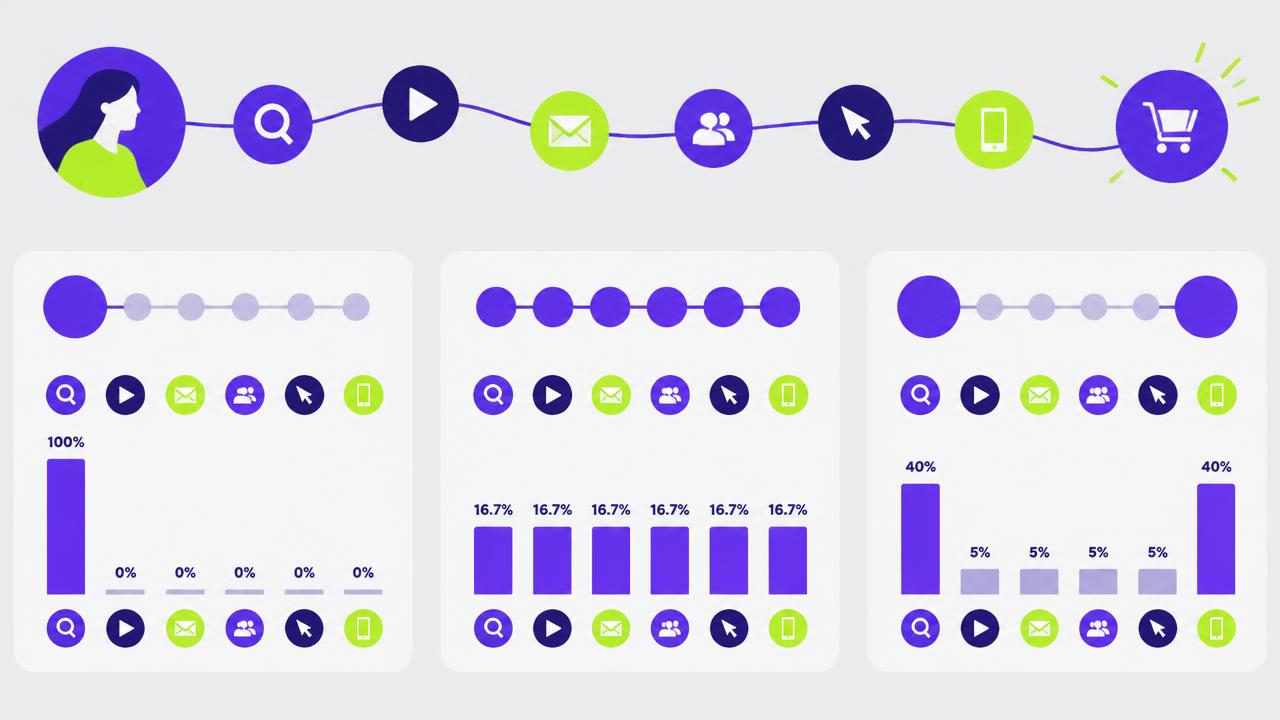
Attribution debates run for years in most companies because they are framed as a search for the correct answer. There is no correct answer. Every model takes a set of observed touchpoints and applies a rule for splitting credit. The rule is an assumption, and the assumption is usually wrong in a predictable direction.
What each model assumes
| Model | Implicit assumption | Who it overpays |
|---|---|---|
| Last click | Only the final touch caused the sale | Brand search, retargeting |
| First click | Only discovery mattered | Top-of-funnel display, social |
| Linear | All touches contributed equally | High-volume, low-impact channels |
| Time decay | Recent touches matter more | Late-funnel again, less severely |
| Data-driven | Observed paths represent reality | Whatever the platform can see |
The observability problem
Data-driven models sound like they escape the assumption trap, but they only learn from the journeys they can record. Cross-device, in-app, offline, and consent-declined activity is invisible, so the model confidently allocates credit within a partial picture. Worse, each platform sees mostly its own touchpoints, which is why the sum of platform-reported conversions routinely exceeds the orders you actually shipped.
If your platforms together claim more conversions than your finance system recorded, attribution is not measuring — it is competing.
Pick one and hold it still
The practical answer is to standardise on one model for reporting, document why, and stop revisiting it quarterly. Consistency lets you see trends. Switching models resets every baseline and creates an argument about whether performance changed or the ruler did.
Calibrate against reality
Run periodic holdout or geo experiments on your largest channels and compare the incremental result to what the attribution model reported. The ratio between them becomes a correction factor you can apply, and it turns a philosophical dispute into a number that gets updated twice a year.
What to tell the board
Report blended acquisition cost and total revenue alongside channel figures. Blended numbers cannot be gamed by attribution choices, and they are what actually determines whether the marketing programme works.
Related articles
The Quarterly Data Quality Audit
Most bad decisions made from data are not made from the wrong analysis. They are made from the right analysis on broken inputs.
Incrementality Testing: The Only Number Your CFO Should Trust
Platform-reported ROAS answers "who touched the sale?" Incrementality answers "would it have happened anyway?" Only the second one supports a budget decision.

Predicting Lifetime Value Without Fooling Yourself
An LTV number that nobody can falsify is not a forecast. It is a permission slip for overspending.